

Driving a beautifully maintained vehicle in the Houston area brings immense satisfaction, but the reality is that the fierce Texas environment constantly attacks your car’s exterior finish. The combination of scorching sun, sudden humidity shifts, and constant contaminants actively works to degrade your factory clear coat, dulling the vibrant shine you love. A professional Ceramic Coating Cypress installation provides a crucial, permanent defense layer, bonding chemically with the paint to repel harmful elements, preserve the vehicle’s original condition, and maintain that deep, impressive gloss for years to come. This is the ultimate way to protect your automotive investment from the elements.
The Battle Against the Elements: Understanding Local Threats
What is it about the Cypress climate that poses the biggest threat to my vehicle’s paint?
The primary threats to your vehicle’s exterior in the Cypress climate are intense ultraviolet (UV) radiation, extreme temperature fluctuations, and a unique mixture of aggressive organic and chemical contaminants specific to the Houston metro area. The constant exposure to these factors accelerates the breakdown of the clear coat, the protective layer over your car’s color paint. When this layer is compromised, your vehicle’s finish loses depth, develops a chalky haze known as oxidation, and becomes permanently susceptible to staining and corrosion.
The professional application of a high-quality Ceramic Coating Cypress service is specifically engineered to counteract these destructive forces. By creating a hard, glass-like barrier, the coating disperses heat, blocks UV penetration, and creates a slick surface that prevents corrosive materials from sticking or chemically bonding with the paint below. This significantly extends the life and vibrancy of your vehicle’s finish, making maintenance dramatically simpler in the face of Texas’s unique challenges.
The Triple Threat: Heat, Sun, and Oxidation

The clear coat on your vehicle is designed to protect the color layer beneath it, but it is not invulnerable. Cypress drivers face a constant barrage of environmental factors that erode this crucial shield over time. Understanding these specific threats helps illuminate why a sacrificial protective layer is necessary.
UV Radiation and Fading
Ultraviolet (UV) radiation from the sun is perhaps the single most damaging element in the Houston area. This high-energy light penetrates the clear coat, causing a process called photodegradation. This breaks down the chemical bonds in the paint and clear coat polymers, leading to cloudiness, fading, and color shift over time. Without adequate defense, even a dark, rich paint color will eventually look tired and washed out due to this constant exposure.
Extreme Thermal Cycles
The rapid and significant thermal cycles experienced across Texas, particularly in the summer, put enormous stress on automotive paint. When temperatures soar above 100 degrees Fahrenheit, your car’s body panels absorb that heat, causing the paint layers to expand. When the sun sets or the vehicle is parked in a cool garage, the layers contract. This constant expansion and contraction gradually weakens the paint’s elasticity, leading to premature aging and the development of micro-fissures that dull the finish. This is why specialized paint protection texas heat solutions are so vital for maintaining structural integrity.
The Oxidation Process
Oxidation is the result of oxygen molecules chemically reacting with the paint film, a process accelerated by UV exposure and moisture. Visually, oxidation appears as a chalky, hazy film that masks the true color and depth of the paint. It starts subtly but quickly becomes permanent damage that cannot be reversed with simple washing. A professional coating acts as a physical barrier, preventing oxygen and UV rays from reaching the clear coat entirely, thereby halting the oxidation process before it can begin.
Contamination Crisis: Acid Rain, Sap, and Droppings
Beyond the weather itself, the Cypress area contains airborne pollutants and organic materials that are highly corrosive. When these settle on unprotected paint, they begin to etch or stain the clear coat almost immediately.
- Bird Droppings: These organic deposits are extremely acidic, with a pH level capable of etching paint within hours, especially when baked onto the surface by intense heat.
- Tree Sap and Pollen: Tree sap hardens quickly into a resilient bond, while the thick yellow coating of pollen common in Texas contains oils that adhere fiercely to unprotected paint, requiring aggressive washing that often leads to surface abrasions.
- Acid Rain and Air Pollution: Airborne industrial pollutants and emissions dissolve in rainwater, creating “acid rain.” This moisture leaves behind mineral deposits and chemical stains that aggressively eat away at the clear coat as the water evaporates.
Preventing these contaminants from chemically bonding with your paint is the primary goal of protection. When you choose Ceramic Coating Cypress for your vehicle’s protection, you are investing in a comprehensive shield against every threat the Houston area can throw at your car. The smooth, non-porous nature of the coating prevents these harmful substances from bonding, allowing them to be easily washed away before they can cause lasting damage.
The Science of the Shield: How Ceramic Coatings Work
A high-grade ceramic coating is not a wax or a simple sealant; it is a specialized liquid polymer composed primarily of Silicon Dioxide (SiO₂), often referred to as liquid glass. This solution is based on advanced nano-technology, meaning the particles are incredibly small, allowing the liquid to fill every microscopic pore and valley in your vehicle’s clear coat.
When properly applied and allowed to cure, this liquid hardens into a dense, crystalline structure that forms a semi-permanent, glass-like layer over the top of the factory paint. This barrier is chemically bonded to the clear coat, making it incredibly resilient to chemical erosion and highly resistant to environmental damage.
Unlike traditional carnauba waxes, which sit on top of the paint and degrade within weeks, a ceramic coating becomes an extension of the clear coat itself. This chemical bond is what gives the coating its unmatched durability and longevity, often lasting for many years rather than just a few months. When you are serious about long-term preservation and minimizing future paint correction costs, this technology is the superior choice. This is the difference between a temporary shine enhancer and a permanent protective shield.
| Feature | Traditional Wax/Sealant | Professional Ceramic Coating |
| Composition | Natural oils, polymers | Silicon Dioxide (SiO₂) Nano-Polymer |
| Durability | Weeks to a few months | Years (2 to 10+, depending on grade) |
| UV Resistance | Low to Moderate | High (Complete UV Block) |
| Hydrophobicity | Moderate (initial beading) | Extreme (slick, self-cleaning effect) |
| Chemical Resistance | Low (easily removed by soap/acid) | High (resists acid rain, sap, droppings) |
| Thickness | Negligible (microns) | Measurable, hard layer |
Core Benefits of a Professional Application
Choosing a professional service for your vehicle’s protection ensures that the application is done correctly, maximizing the effectiveness of the coating. The benefits go far beyond just a glossy look.
Superior UV Defense
Protecting against the sun’s harsh rays is one of the most critical reasons to invest in specialized vehicle protection in Cypress. A high-quality coating acts like a dedicated sunscreen for your car, filtering out the damaging UV light that causes paint fade and oxidation. This superior uv protection ceramic coating cypress provides ensures that the car’s color depth and clarity are locked in, preserving the vehicle’s value and appearance against the intense, daily thermal load from the sun.
Hydrophobic Power and Self-Cleaning
The most noticeable benefit of the coating is its powerful hydrophobic property. Once cured, the glass-like surface makes water bead up intensely and roll right off, taking dirt and grime with it. This self-cleaning effect means that your vehicle stays cleaner for longer, and when you do wash it, the process is far quicker and requires less effort. This water repellency dramatically reduces the risk of mineral deposits and water spotting, a common issue in humid climates. When exploring the best options for your vehicle, look no further than the trusted professionals at our services, where we pair this advanced protection with meticulous preparation to ensure flawless results.
Enhanced Gloss and Depth
A ceramic coating significantly enhances the visual appeal of your vehicle. The uniform, highly smooth surface acts like a magnifying glass, intensifying the paint’s reflective properties. It gives the finish a “wet look” or “liquid glass” depth that is far superior to any traditional wax. The coating seals in the brilliance of your paint, ensuring your car always looks like it just rolled off the showroom floor. We are proud to deliver this level of finish to every customer at Ixexotics.
The Professional Edge: Why Installation Matters
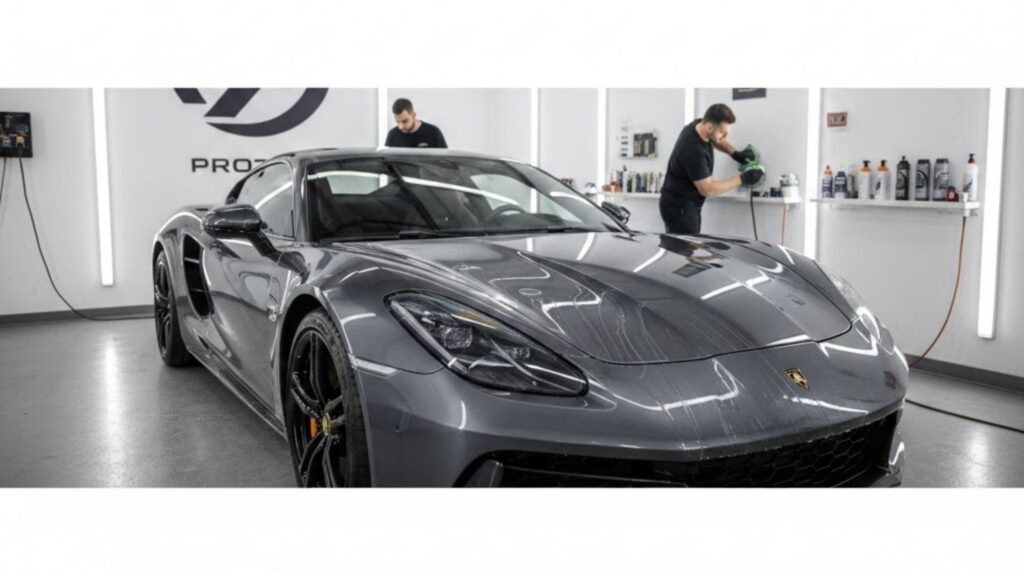
The effectiveness and longevity of any coating system are entirely dependent on the quality of the preparation and installation process. This is not a product that can simply be sprayed on.
The Essential Preparation Phase
The most important step, which separates professional results from subpar DIY efforts, is paint correction. Before a coating is applied, the clear coat must be perfectly clean and free of imperfections.
The process includes:
- Decontamination Wash: A deep cleaning to remove surface dirt and road grime.
- Chemical Decontamination: Using specialized iron and fallout removers to dissolve embedded metallic particles.
- Clay Bar Treatment: Using a clay bar to physically pull embedded contaminants like tar and industrial fallout from the clear coat pores.
- Machine Polishing (Correction): Using precision polishing tools to remove swirl marks, minor scratches, and oxidation that have already compromised the surface.
If the coating is applied over imperfections or dirt, those flaws are permanently sealed beneath the glass-like layer. The meticulous preparation provided by experts, such as the dedicated team at Ixexotics, ensures the coating bonds perfectly and the results are truly flawless.
Looking Beyond Ceramic: PPF vs. Coating
Often, clients ask about the difference between ceramic coatings and Paint Protection Film (PPF). While both offer protection, they serve distinct purposes, and the best solution often involves using both.
Ceramic coating creates a hard, chemical, and UV-resistant barrier that is microscopic in thickness. It excels at defending against environmental etching, fading, and making the car easier to clean due to its hydrophobic properties. It offers superior ceramic coating sun damage defense.
PPF, or “Clear Bra,” is a thick, transparent urethane film (often 8-10 mils thick) that acts as a physical shield. PPF is designed to absorb the impact of rock chips, road debris, and deep scratches. PPF offers ultimate physical protection, while the ceramic coating offers superior chemical protection and aesthetic enhancement.
The ultimate protection package is often a combination: PPF applied to high-impact areas like the front bumper, hood, and fenders, with ceramic coating applied over the rest of the vehicle, and even over the PPF itself, to enhance gloss and add hydrophobic ease of cleaning.
Longevity and Maintenance
One of the great advantages of professional-grade coatings is their lasting performance. While waxes need reapplication every few months, quality ceramic coatings are rated to last anywhere from two to ten years, depending on the specific product and the number of layers applied.
While the coating is semi-permanent, maintenance is still required, but it is much simpler:
- Washing Technique: Always use a pH-neutral car shampoo, which will not degrade the coating. Avoid harsh, acidic, or alkaline cleaners.
- Tools: Always use high-quality, clean microfiber wash mitts and drying towels to prevent adding swirl marks back into the coating.
- Contaminant Removal: If aggressive contaminants like bird droppings or bug guts land on the surface, they should still be removed promptly, especially in the heat, although the coating gives you a much larger window of protection than raw clear coat.
The professionals at Ixexotics will provide a comprehensive guide to maintaining your coated vehicle, including recommendations for special ceramic booster sprays that can be applied annually to revitalize the slickness and extend the coating’s protective life well past its rating.
Frequently Asked Questions
Here are answers to some of the most common questions our clients ask when considering protecting their vehicle’s finish.
FAQ 1: Is ceramic coating worth the investment?
Yes, ceramic coating is absolutely worth the investment, particularly in harsh climates like Cypress, Texas. The primary value lies in long-term paint preservation, which directly maintains your vehicle’s resale value and drastically reduces the time and cost associated with washing and detailing the vehicle over its lifetime. The coating acts as a permanent insurance policy for your clear coat against UV rays and chemical etching.
FAQ 2: How long does a ceramic coating typically last?
A professional-grade coating installed by certified specialists typically lasts between three and ten years. The longevity depends heavily on the specific product tier chosen and how well the vehicle is maintained. Vehicles that are regularly washed and stored in a garage will see the coating approach the upper end of its lifespan.
FAQ 3: Will ceramic coating protect my car from deep scratches and rock chips?
No, a ceramic coating is not thick enough to absorb the physical impact needed to prevent deep scratches, keying, or stone chips. For defense against these physical impacts, a Paint Protection Film (PPF) is required. The coating is a sacrificial layer designed to stop chemical damage, oxidation, and micro-marring from washing.
FAQ 4: What is the key difference between ceramic coating and PPF?
The key difference is the layer thickness and protection type. Ceramic coating is a thin, liquid glass layer that provides chemical resistance, UV protection, and exceptional gloss. PPF is a thick, physical polyurethane film that provides a substantial barrier against physical damage like rock chips and deep scratches. For expert advice tailored to your daily driving habits and protection needs, please contact us today for a personalized consultation.
FAQ 5: How soon can I wash my car after ceramic coating application?
Most professionally applied ceramic coatings require a specific curing time, typically ranging from 48 to 72 hours, before they can be exposed to moisture or washing. Professional installers will advise clients to avoid washing the car for at least one full week to ensure the coating has completely hardened and bonded with the clear coat. We stake our reputation on the longevity of our applications; at Ixexotics, we provide precise instructions for post-installation care to guarantee maximum performance.
Conclusion
Protecting your vehicle’s finish against the relentless climate of Cypress is not a luxury; it is a necessity for maintaining its beauty and value. The intense sun, aggressive contaminants, and temperature extremes found in the region demand a defense system superior to traditional waxes or sealants. Ceramic Coating Cypress is the definitive modern solution, offering a semi-permanent, durable shield that ensures deep gloss, effortless cleaning, and unparalleled resistance to the elements. Choosing a high-quality service ensures your vehicle remains a source of pride for years to come.